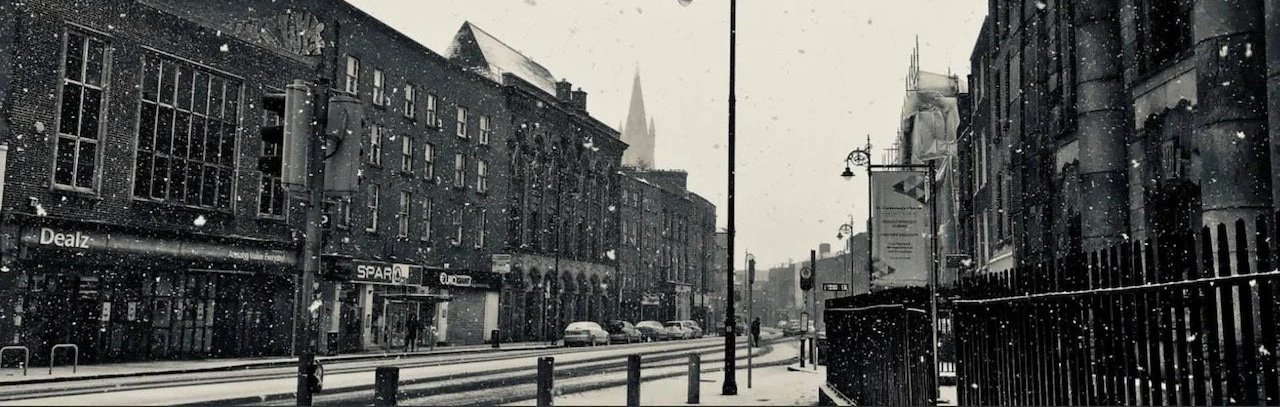
…but her saints are worn down and their faith eroded by the sins and corruption of trusted men and women.
Ireland is the Land of Saints & Scholars
…but her saints are worn down; the people’s hearts are faint with division. and any faith held is now eroded—nearly decimated—because of the sins and corruption of trusted men.
The Land of Saints and Scholars
The Stats

The entire island of Ireland (Republic and Northern Ireland) could fit within the state of Indiana, in both area (32,595 sq mi) and population (6,632,316).
Dublin, the capital city, (metro area of 1.9M people) is slated to reach 2.6M, in 10 years.
As of 2016, 82% of Irish people claimed to belong to a Bible-based religion (77% Catholic; 4% Protestant). Of those 4,761,865 counted in the census, just 1% (47,929) of people claimed to be ‘Christian,’ ‘Evangelical,’ or ‘Born-Again.’
The metro area of Dublin, there are some 230 churches in operation. The largest, a Romanian-speaking congregation, has approximately 900 members. The largest English-speaking congregation has roughly 300 members. Most of the other congregations & parishes would have less than 50 members in attendance, on any given Sunday.
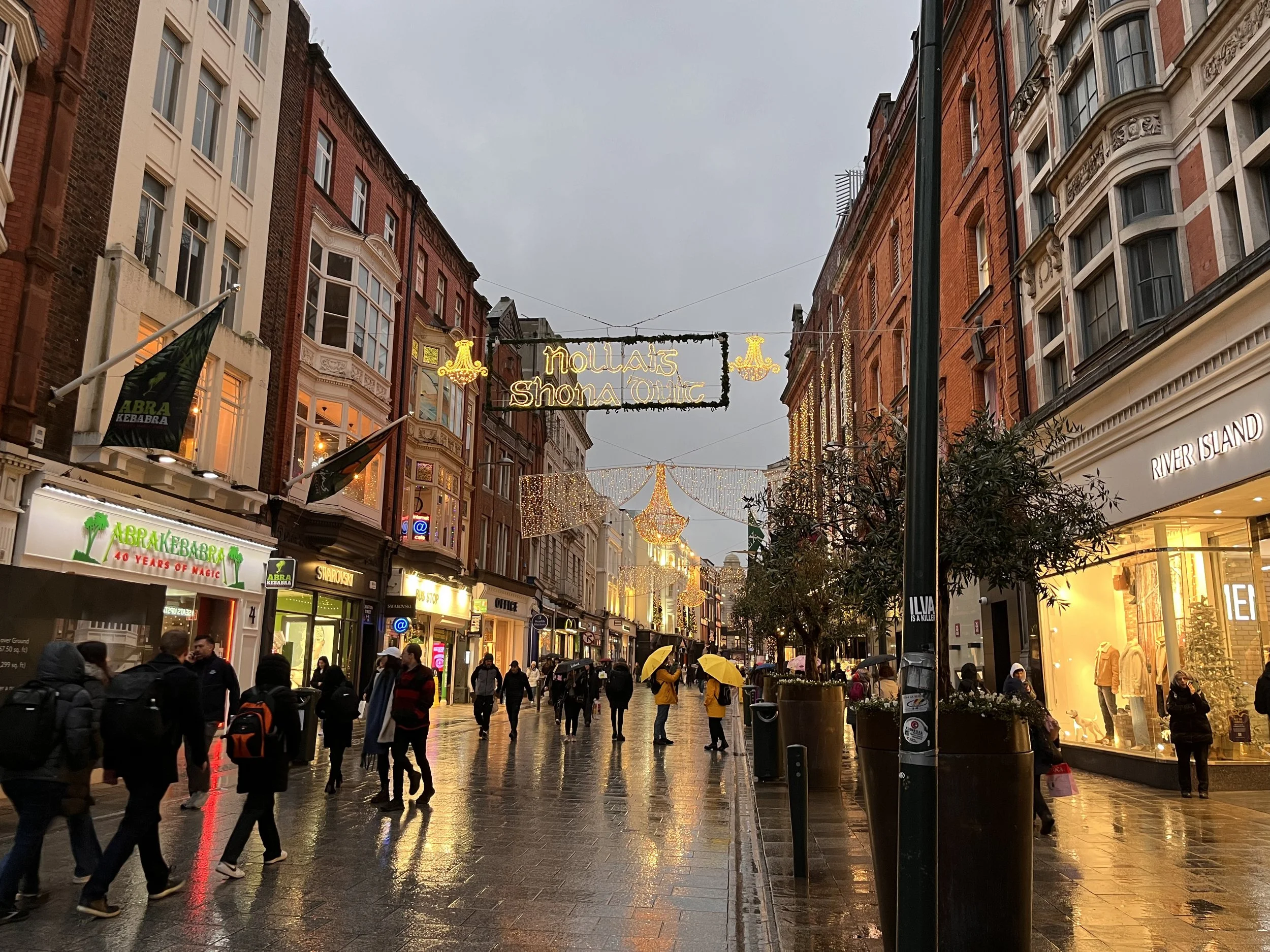
While there was a 132,220 person drop among Catholics, from 2011 to 2016, 468,421 Irish people claimed "No Religion" on their census forms—an increase of 198,610 people.
Thus, 1 in 10 Irish people say they have no religion, which is a 73.6% increase since 2011. This makes "No Religion" the second largest group in this category behind Roman Catholics.
In 2012, a Gallup poll found that 53% of Irish people reported to be irreligious, answering ‘No’ to the question, "Does religion occupy an important place in your life?”

In the 1920s, the Church established ‘Mother & Baby Homes’ across Ireland.
The Betrayals
Not Forgotten
Mention to someone, in Ireland, that you are a ‘Christian’ and their first thought will be (they might even say it aloud), ‘Oh, well then, you must be okay with all of the abuse and atrocities the Church has committed against women and children, for centuries!’
For sure a hostile response, but it is a fair one.
In 2002, the Boston Globe broke the story of widespread sexual abuse against children within (and covered up by) the Catholic Church and similar findings were subsequently discovered the world over. In Ireland, however, such abuses among women and children were prevalent all over the country.
For generations, every man, woman, & child went to church and the Church was everywhere—looming, among other things, over parishes and public schools. As such, nearly every adult over 30, who has grown up in Ireland, could tell you either a first-hand or second-hand story of a specific event of abuse.
In the 1920s, the Church established ‘Mother & Baby Homes’ across Ireland.
Young girls who were pregnant, raped, or ‘too precocious’ would be taken to these halfway-homes, against their will. Unable to ever leave on their own, they were forced into hard labour and horrifically abused physically, sexually, and through gross neglect. Girls who arrived pregnant were properly cared for, through to delivery. But after delivery, the babies were then taken from the new mothers and ‘adopted out’ (sold, really) to wealthy, Irish-American couples. This would happen without the young mother’s consent (or knowledge) and, in most cases, these Homes kept separated mothers and children from being able to find each other—even decades afterward. Children who weren’t taken by couples in the US suffered a harsh existence of neglect, malnourishment, and abuse. Moreover, the mothers, who had delivered and whose babies were ‘adopted,’ were still forced to remain in the Home and unable to leave on their own volition.
These Homes were ungodly places; gutters of evil. In 2017, an investigation into an abandoned Mother and Baby Home, in Tuam, Co. Galway, uncovered a mass grave, containing the skeletal remains of 796 babies and toddlers. To cover up their criminal mistreatment and avoid public scrutiny, the 796 deaths went undocumented and the bodies tossed aside into an underground cistern.
The last ‘Mother and Baby Home’ was shut down, only in 1996, and the women who survived these atrocities are now only as young as being in their early 40s. What is more, there were countless children born in these places, who would be left with little-to-no chance of reconnecting to their mothers, extended families, and their own history.
The sad truth is that the religion most people, in Ireland, had been taught—and experienced—wasn’t much like the Gospel nor the Kingdom—and certainly nothing like Jesus. As such, most folks don’t look at the Cross and think about Jesus’ sacrifice, nor do they think about his unending love for themselves. What they see is a symbol that has divided their country and abused their children…
And so, we continue to pray that the people of this country we love might come to discover Jesus, might for themselves explore a real faith in God, and realise the peace and hope and love that he has for them.